Reviewing IEP Goals for Gestalt Language Processors: What to Look For and What to Change
Apr 08, 2026
As the school year comes to a close, many families and professionals are reviewing progress, attending IEP meetings, and beginning to think about goals for the upcoming year.
This is often when we hear questions like:
Are these goals appropriate?
Why hasn’t this goal been met yet?
What should we be focusing on next?
When it comes to gestalt language processors (GLPs), these questions are especially important. Many well-intentioned goals written for IEPs are based on analytic language development, which can lead to frustration, slow progress, or skills that don’t generalize.
The good news is that once you understand gestalt language development and the Natural Language Acquisition (NLA) framework, it becomes much easier to evaluate progress and create goals that actually support language development.
The Big Picture: What Are We Working Toward?
Our long-term goal for gestalt language processors is to support the development of self-generated, flexible language. It’s important to remember that gestalt language development is a natural and valid developmental pathway. GLPs are not disordered analytic language processors. They are developing language in a different (and totally valid!) way.
Not every GLP will need support to reach self-generated language. Many children get there on their own. Others, particularly those who continue to primarily use delayed echolalia beyond the toddler years, may benefit from targeted support.
Even as children progress, they may still use delayed echolalia at times. This can happen during dysregulation, fatigue, play, or for sensory reasons. This does not mean they are “stuck” in earlier stages. It simply reflects how gestalt language processing works.
To truly understand progress, we need to look at where they are within the stages of gestalt language development, with language sampling and analysis using the Natural Language Acquisition framework (Blanc, 2012).
Why Some IEP Goals Don’t Lead to Meaningful Progress
One of the most common things we see at the end of the school year is goals that haven’t been met and it’s often not because the child “isn’t engaged” or “isn’t trying.” It’s because the goals didn’t match their stage of development. For early-stage GLPs (Stages 1 and 2), common IEP goals that tend to be misaligned include:
- Wh-question goals
- Grammar goals
- Conversational turn-taking goals
- Labeling goals
- Expansion goals
These goals are rooted in analytic language development. When introduced too early for gestalt language processors, they often result in rote responses, scripting of questions, or increased frustration rather than natural language development towards self-generated language. This is why reviewing goals at the end of the year is so important. It gives us an opportunity to realign.
What Progress Actually Looks Like Across the Stages
When goals align with the stage of gestalt language development the child is in, rather than rushing goals, or creating goals that aren't developmentally appropriate for where the child is at, progress may look different than expected, but it is necessary for true progress and long-term language development.
Stage 1: Increasing the Amount & Variety of Gestalts
In Stage 1, our goal is to increase the variety and amount of mitigable (easy to mix-and-match or trim down) gestalts. As children begin to make progress towards this goal, you may hear more gestalts/scripting. That is a positive sign!
- Note: There is no pre-stage 1. This means that there are no prerequisite skills children need such as imitation, joint attention, gestures and general vocalizations before we can target Stage 1 goals. However, these goals might include the use of multimodal communication (e.g., spoken language, AAC, etc.). Learn more about this here.
Stage 2: Mitigating & Trimming Down Gestalts
In Stage 2, progress looks like mitigation. This includes:
- Mixing and matching parts of gestalts
- Trimming down longer scripts into smaller chunks
This stage is often overlooked in IEP goals, but it is very important to progress towards flexible language.
Stage 3: Isolating Single Words & Two-Word Noun Combinations
In Stage 3, children begin isolating single words and combining them into two-word, flexible, self-generated noun combinations. You might see:
- Noun + noun
- Noun + adjective
- Noun + Modifier
- Noun + Location
There is no particular order these need to be in and we are not concerned about grammar yet!
This is often where language starts to look more “traditional," or "analytic." Sometimes well-intentioned adults begin to worry that they are seeing regression here because a GLP will go from using longer gestalts/phrases, to using these shorter single words and two-word combinations but this is an extremely important stage and it is progress towards longer self-generated utterances, not regression.
Stages 4–6: Expanding Language and Communication
Once a child is self-generating language using longer utterances (stages 4+), we can begin to target:
- Grammar
- Wh-questions
- Narratives
- Problem solving
- Higher-level language
This is also when we begin to expand beyond expressive language goals.
Rethinking “Social Communication” Goals for GLPs
As children move into later stages (and sometimes earlier), IEP teams often shift toward social communication goals. This is where it is especially important to pause and reflect. Many traditional goals, such as eye contact, “whole body listening,” expected vs. unexpected behaviors, or rigid conversational rules are based on neurotypical standards.
For many autistic and neurodivergent children, these goals can be harmful or lead to masking rather than meaningful communication. Instead, we want to take a neurodiversity-affirming approach.
What to Focus on Instead
Listen to Autistic Voices
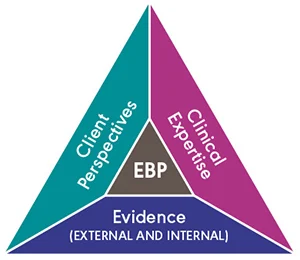
Autistic individuals have consistently shared that traditional social skills approaches can be harmful. Their perspectives are a critical part of evidence-based practice. Evidence-based practice includes not only research, but also clinical expertise and client perspectives (ASHA, n.d.).
Support Self-Advocacy
Children cannot advocate for their needs if they don’t understand them. We want to support children in:
- Understanding their sensory, communication, and learning needs
- Identifying tools and accommodations that help them
- Communicating those needs across environments
Teach the Double Empathy Problem
Communication breakdowns are not one-sided. The Double Empathy Problem highlights that both autistic and non-autistic individuals may struggle to understand each other due to differences in perspective and experience. Teaching this helps normalize differences and reduce blame.
Introduce the Spoon Theory
The Spoon Theory helps children understand their energy and capacity throughout the day. Goals might include:
- Identifying energy levels
- Recognizing which activities are more draining
- Learning how to rest, regulate, or advocate for support
Explore Communication Styles
All children benefit from understanding that communication styles vary. For example, some people prefer eye contact, while others find it uncomfortable or painful. No communication style is “better.” This supports both self-awareness and mutual respect.
Support Regulation
We also want to support children in identifying:
- Body signals
- Emotional states
- Regulation strategies that work for them
These strategies should be individualized and affirming not compliance-based.
Teach Problem Solving and Perspective Taking
Instead of focusing on “correct” behavior, we focus on solutions that work for the individual and those around them. We also ensure that we are validating all perspectives involved, not just neurotypical expectations.
Problem-Solving Example: If Lucy finds eye contact to be uncomfortable and painful, the best solution to a problem with an adult in her life expecting eye contact would not be to force Lucy to make eye contact but might be to focus on ways she can self-advocate and educate about preferred communication styles.
Perspective-Taking Example: Using the situation from above, Lucy’s perspective is that eye contact is uncomfortable and painful. She cannot effectively listen and process information when forced to make eye contact because that is where all of her “spoons”/energy goes rather than the conversation. The adult’s perspective might be that Lucy’s lack of eye contact is because she doesn’t care about the situation. The adult may have never been informed that some people feel eye contact is uncomfortable or painful.
What to Take Into Your Next IEP Meeting
As you head into end-of-year meetings or begin planning for next year, here are a few key questions to guide you:
- Do these goals align with the child’s current stage of gestalt language development?
- Am I supporting natural language development or am I teaching language? More on this here.
- Are we supporting autonomy, regulation, and self-advocacy?
- Do these goals truly honor the child or are they trying to make them "look" more neurotypical?
When we align goals with development and take a neurodiversity-affirming approach, we create IEPs that actually support long-term success. We are not trying to make children communicate or "look" more neurotypical. We are supporting them in becoming flexible, autonomous communicators who understand themselves and can advocate for their needs.
Want to learn more about supporting gestalt language processors?
If you’re looking for more support with goal writing, understanding the stages of gestalt language development, and how to confidently support GLPs in school settings, our original Meaningful Speech course goes deeper into all of this. Inside, we walk through assessment, goal setting, and examples you can use right away, along with a bonus module specifically focused on supporting gestalt language processors in schools. More information on that can be found HERE.