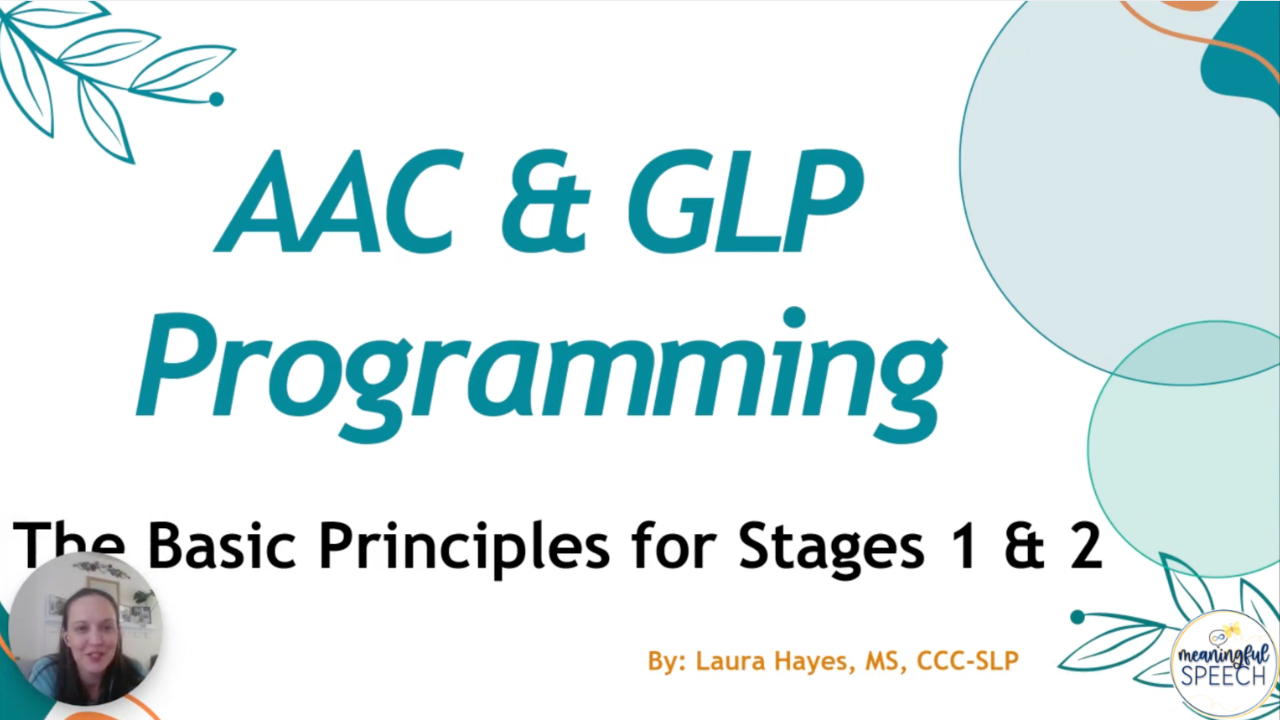
AAC & GLP Programming Mini-Course (Stages 1 & 2)
For AAC users who are gestalt language processors, the organization of their AAC system and the language we model can play an important role in supporting meaningful communication. But with so many AAC systems and language softwares organized for analytic language development, where do you begin?
In this mini-course, we’ll explore the different types of language organization found in AAC software and consider how these organizational approaches can support gestalt language processors. You’ll develop a better understanding of how AAC systems organize language and how to make thoughtful, individualized decisions that support each learner’s unique communication needs.
We’ll focus specifically on supporting gestalt language processors in Stages 1 and 2 of language development, with practical strategies for modeling meaningful language, honoring a learner’s existing gestalts, and supporting customizations for potential gestalts to support language growth within the different language organizations that currently exist in AAC softwares.
Whether you’re an SLP, AAC specialist, educator, or another communication partner, this course will help you feel more confident navigating AAC language organization and supporting gestalt language processors as they build meaningful connections between the language they hear, the language they use, and the AAC systems available to them.
Frequently Asked Questions
Who is this course for?
This course is designed for any communication partner who supports an AAC user they believe to be in the early stages of gestalt language development. Whether you’re an SLP, AAC specialist, educator, or family member, this course will help you better understand AAC language organization and considerations for programming AAC systems to support early gestalt language development.
Is this the same as the full AAC and Gestalt Language Processing course?
No! This mini-course is entirely dedicated to AAC programming for gestalt language processors, with additional examples and considerations that differ from those presented in the full AAC and GLP course.
The full course also includes AAC information and examples, but this mini-course builds on that foundation by providing more opportunities to explore the language organization of different AAC software programs and consider how to approach programming for AAC users in the early stages of gestalt language development. It’s a great option if you’re looking for additional practice, examples, and guidance specific to AAC programming.
How long is this course?
This mini-course is approximately 2 hours long, allowing you to explore key concepts, compare AAC language organization approaches, and work through practical examples at your own pace.
Which AAC apps does this course cover?
The course explores the language organization of the large majority of commercially available AAC apps, with examples from a variety of systems, including but not limited to:
-
LAMP Words for Life
-
TD Snap
-
Grid 3
-
TouchChat with WordPower
The goal is to help you better understand how different AAC systems organize language and what to consider when programming across a variety of platforms.
Will I receive CEUs for this course?
This course provides 2.0 Professional Development Hours (PDHs) that may be used toward continuing professional licensure requirements. Please check with your individual licensing board or credentialing organization to confirm that these hours meet your specific requirements.