Prompt-Free Pathways
9 Practical Strategies for Supporting Spontaneous Communication
Prompt dependence is common for gestalt language processors, and often, it isn't about the child. It's about the strategies we have been taught to use as parents and professionals.
Questions, verbal cues, and fill-in-the-blank prompts are commonly used to encourage communication. However, relying on these strategies can unintentionally create situations where children wait for a prompt rather than communicating spontaneously.
How can we move away from prompting and create more opportunities for spontaneous, self-initiated communication?
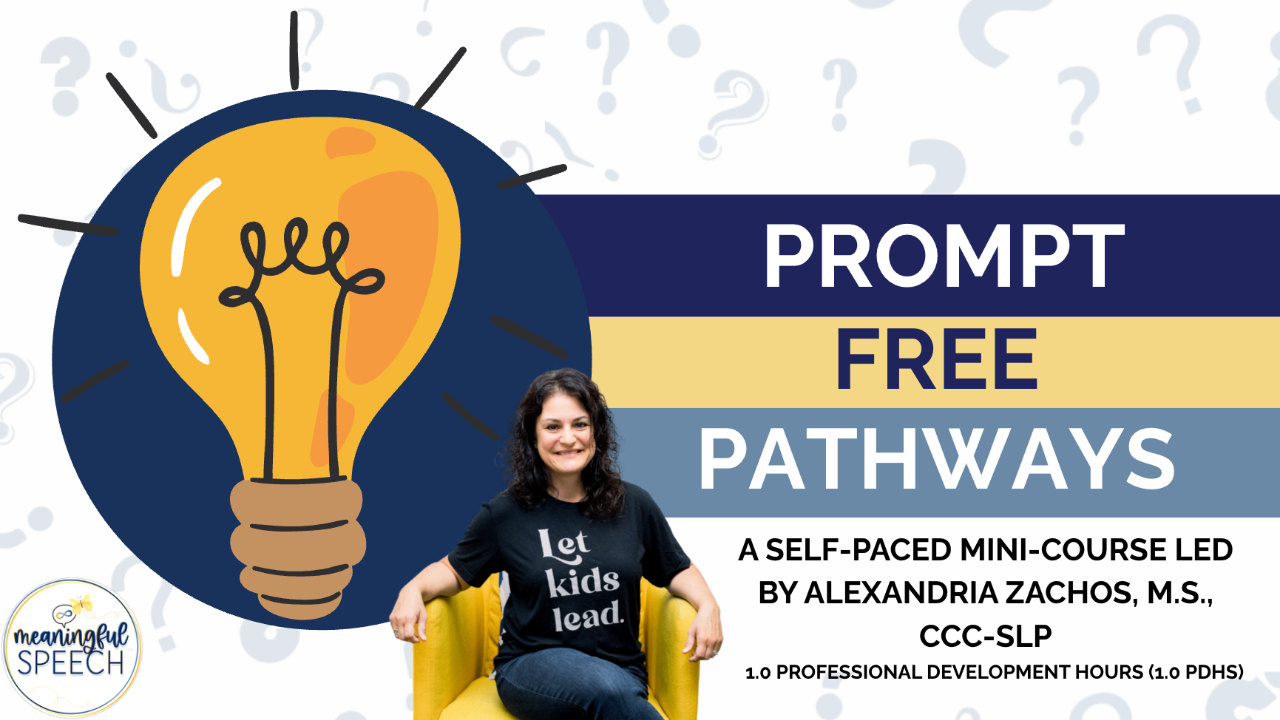
In this 1-hour, self-paced mini-course, Meaningful Speech founder, Alex Zachos, M.S., CCC-SLP, walks you through 9 practical strategies designed to support spontaneous communication without relying on questions, cues, or fill-in-the-blank prompts.
You'll learn how to shift from "teaching language" to supporting natural language development, with a focus on child-led interactions, regulation, connection, and modeling language without expectation.
Throughout the course, we'll explore how everyday interactions can support communication without placing pressure on a child to respond. You'll gain practical ideas for making small but meaningful changes to the way you interact with gestalt language processors, whether you're supporting communication at home, in therapy, or in an educational setting.
Whether you're a parent, SLP, educator, or another communication partner, this mini-course will help you feel more confident recognizing prompt-dependent interactions and creating opportunities for authentic, self-initiated communication.
Frequently Asked Questions
Who is this course for?
This course is designed for parents, speech-language pathologists, educators, and other communication partners who want to support spontaneous, self-initiated communication in gestalt language processors.
Whether you're just beginning to learn about gestalt language development or looking to make your existing strategies more child-led and neurodiversity-affirming, this course provides practical approaches you can incorporate into everyday interactions.
What will I learn in this course?
This mini-course introduces 9 practical strategies for reducing reliance on prompts and supporting spontaneous communication.
You'll explore:
-
How to recognize prompt dependence and understand how it may develop
-
Why common strategies like asking questions, using verbal cues, and fill-in-the-blank prompts may not always support spontaneous communication
-
How to model language without expecting an immediate response
-
Ways to create natural opportunities for self-initiated communication
-
The importance of child-led interactions, regulation, and connection in supporting language development
-
How to begin incorporating more responsive, less directive communication strategies into everyday routines and interactions
The goal is to help you feel more confident supporting gestalt language processors without relying on prompts to support language.
Is this course only for professionals, or can parents benefit too?
Both! The strategies shared in this mini-course are relevant to anyone supporting a gestalt language processor.
For professionals, the course offers practical considerations for creating more natural, child-led interactions during therapy sessions and educational activities.
For parents and caregivers, it provides approachable strategies for supporting communication during play, daily routines, and other everyday moments.
Do I need to have completed the Original Meaningful Speech Course first?
No! This mini-course focuses specifically on practical strategies for reducing prompt dependence and supporting spontaneous communication.
While a foundational understanding of gestalt language processing may be helpful, you do not need to have completed the Original Meaningful Speech Course to participate.
If you've already taken the Original Course, this mini-course offers an opportunity to explore prompt dependence in greater detail and focus on actionable strategies you can apply to your interactions.
How long is this course?
This mini-course is approximately 1 hour long and is entirely self-paced, allowing you to work through the content at a time that works best for you.
Will I receive CEUs for this course?
This course provides 1.0 Professional Development Hour (PDH) and a professional development certificate upon completion.
These hours may be used toward continuing professional licensure requirements. Please check with your individual licensing board or credentialing organization to confirm that these hours meet your specific requirements.
For Illinois professionals: This course is IL Early Intervention approved.
Can I ask questions during the course?
Yes! The course includes open comments where learners can ask questions related to the content.